Planning your first trip to Japan?
▼If you’re also planning a trip to Hokkaido, you may want to check out my guides on Hokkaido weather and the best time to visit.
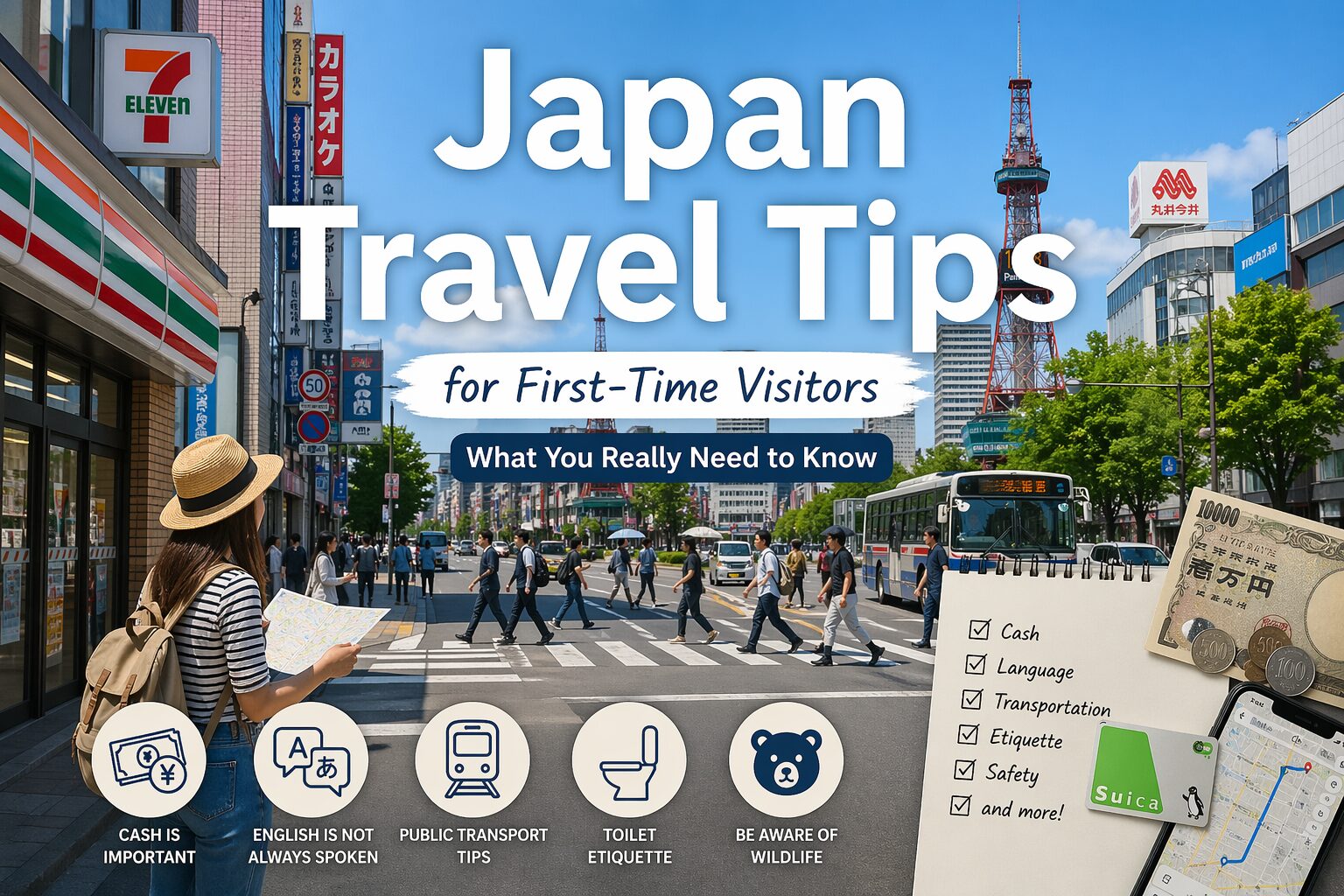
Japan is a safe and convenient country, but there are some things that may surprise you — especially if it’s your first time visiting.
Based on my experience living in Japan (especially in Hokkaido), here are practical tips to help you avoid common problems and travel more smoothly.
- 1. Cash Is Still Important
- 2. English Is Not Always Spoken
- 3. Google Maps Is Essential
- 4. No Tipping Culture
- 5. How to Get Staff at Restaurants
- 6. Toilets May Be Different
- 7. Public Transportation Tips
- 8. Taxi Apps Are Helpful
- 9. Be Prepared for Lines
- 10. Be Careful at Crosswalks
- 11. Be Aware of Wildlife (Especially Bears in Hokkaido)
- 12. Driving in Hokkaido (For International Visitors)
- Final Thoughts
- Need Help Planning Your Trip?
1. Cash Is Still Important
Even though Japan is modern, cash is still widely used.
Especially in places like Hokkaido, many small or local restaurants only accept cash.
From my experience, this is even more noticeable in Sapporo compared to Tokyo.
Tip:
- Carry some cash at all times
- Use convenience store ATMs
2. English Is Not Always Spoken
In major tourist areas, English is more common.
However, in many local places, English is limited.
From what I’ve seen, communication can be difficult in smaller restaurants or shops.
Tip:
- Use Google Translate
- Learn a few simple phrases
- Don’t worry — people are usually kind and will try to help
3. Google Maps Is Essential
Google Maps works very well in Japan.
I personally use it all the time, even as a local.
You can:
- Check train routes
- Find restaurants
- Navigate easily
4. No Tipping Culture
Tipping is not required in Japan.
In fact, leaving a tip can sometimes confuse staff.
The price you see is the final price.
5. How to Get Staff at Restaurants
In many restaurants, there is no waiter constantly checking on you.
- Some places have a call button
- If not, you’ll need to get their attention
In Japan, people usually say “Sumimasen” (excuse me) to call staff.
However, this can feel a bit difficult if you’re not used to it.
In that case, simply raising your hand and making eye contact works perfectly.
This is completely normal and staff will come to you.
6. Toilets May Be Different
In Japan, you may see both:
- Western-style toilets
- Traditional Japanese-style toilets
However, nowadays, most Japanese people also prefer Western-style toilets, and they are much more common.
If there’s a line and your turn is for a Japanese-style toilet, it’s perfectly fine to let someone else go ahead.
This happens quite often and is generally understood.
7. Public Transportation Tips
Trains
Trains in Japan are usually very punctual and easy to use with IC cards.
However, in Hokkaido, trains can sometimes be delayed or even canceled during winter due to heavy snow.
From my experience, this happens quite often in the colder months.
Subways are not affected by snow and are very convenient, but they only operate within central Sapporo.
If you’re traveling within the city, the subway is often the most reliable option.
Trams (Streetcars in Sapporo)
Sapporo also has a tram (streetcar) system.
It’s a fun and very “local Japan” experience, so I recommend trying it if it fits your route.
Buses (Important)
Even for Japanese people, buses can be confusing.
- They don’t always arrive exactly on time
- Boarding systems can vary
However, buses and trams (streetcars) can be used with the same IC cards as trains, including mobile IC cards like Welcome Suica Mobile.
This makes getting around much easier, even for first-time visitors.
Useful Tip
If you’re traveling outside major cities in Hokkaido:
Public transportation is often limited.
- Fewer trains and buses
- Longer waiting times
Tip:
Plan your schedule in advance and check timetables carefully.
Mobile Payment (Recommended)
Using IC cards on your phone can make traveling much easier.
For example, you can use Welcome Suica Mobile to pay for trains, buses, trams, and even some shops without needing cash.
This is especially helpful if you want a smoother travel experience.
8. Taxi Apps Are Helpful
Taxi apps are very convenient, especially if you’re not familiar with the area.
This is useful when:
- It’s late
- You have luggage
- Public transport is limited
9. Be Prepared for Lines
Popular restaurants often have long lines.
In Sapporo, waiting 30 minutes or more is common for famous ramen shops.
Tip:
- Be prepared to wait
- Or choose a less crowded place
10. Be Careful at Crosswalks
In Japan, pedestrians have the right of way.
However: Not all cars stop.
From my experience, it’s always better to check both directions before crossing.
11. Be Aware of Wildlife (Especially Bears in Hokkaido)
In Hokkaido, wild animals are part of the natural environment — including brown bears.
This is especially important if you plan to visit rural areas, mountains, or go hiking.
From my perspective, this is not something you need to worry about in cities, but it’s important to stay informed when traveling outside urban areas.
Tips:
- Avoid entering restricted or poorly marked forest areas
- Follow local signs and warnings
- Check the latest safety information before your trip
For the most up-to-date information, it’s best to check official sources such as local government websites.
12. Driving in Hokkaido (For International Visitors)
If you plan to drive in Japan using an international driving permit, be aware that driving conditions in Hokkaido can be different.
In rural and mountainous areas, animals such as deer may suddenly appear on the road.
From my experience, this is not uncommon, especially when driving in less populated areas.
Tips:
- Drive carefully, especially in the countryside
- Be extra cautious at night
- Reduce speed in areas with warning signs
Driving in Hokkaido can be a great experience, but safety awareness is important.
Final Thoughts
Japan is a very safe and enjoyable country to travel in, even for first-time visitors.
You can enjoy your trip at any time of year — but preparation makes a big difference.
The climate and travel experience can be quite different from other countries, so adjusting your expectations (and clothing) is important.
▼For more details, see my full guide on Hokkaido weather.


If you keep these tips in mind, your trip will be much smoother and more enjoyable.
Need Help Planning Your Trip?
If you have any questions about traveling in Japan, feel free to reach out through my contact page. I’d be happy to help!